EVERYTHING IS A DATA CENTER NOW
a carytown grocery's parent company is merging with an oklahoma server farm. on paper, the grocery is the parent. read the ninety-six.
THE HEADLINE THAT SHOULDN'T PARSE
Some sentences are load-bearing in a way their authors did not intend.
"Ellwood Thompson's owner to combine with data center-AI firm, says store will stay open."
Read it twice. The first half is a business transaction. The second half is a hostage statement. Somewhere between the comma and the period, an editor decided the most urgent thing a Richmond reader needed was reassurance that the bulk bins would be there Saturday — which means that was everyone's first question, which means the instinct in Carytown was that a grocery store touching the words AI data center might simply evaporate.
The store sits at 4 N. Thompson Street. Seventeen thousand square feet. A neighborhood institution long enough that people organize their weekends around it, and independent until 2023, when it was acquired by a company that was itself spun out of another company in 2024. Its current parent, Florida-based Healthy Choice Wellness Corp., runs nineteen grocery stores across New York, Kansas, Oklahoma, Florida and Virginia.
That parent is now merging with Host Digital Infrastructure, a New York data center and artificial intelligence company — per SEC filings and an interview Healthy Choice's president and COO, Chris Santi, gave Richmond BizSense.
WHO ACQUIRED WHOM
Here is where it gets genuinely funny, and we want to be careful, because nothing in this section is an accusation. It's arithmetic.
It's a reverse merger — the mechanism by which a private company goes public by taking a controlling stake in an already-listed one, skipping the IPO. When it closes, the current owners of Host Digital are set to control 96 percent of Healthy Choice's common stock.
And yet, structurally, Host Digital becomes a subsidiary of Healthy Choice.
So on the org chart, the grocery company is the parent. In the shareholder register, the data center people own ninety-six percent of the grocery company. Host Digital also selects the combined entity's new name, and its current top executive, Harmol Samra, becomes CEO.
The tail is not wagging the dog. The tail has purchased the dog, renamed the dog, hired a new dog, and been formally classified as a subsidiary of the dog. This is a completely ordinary transaction that companies execute constantly, and it is also the funniest org chart in American retail this week.
THE NUMBERS, WHICH ARE NOT A JOKE
Before anyone gets too pleased with themselves, the financials explain everything, and they aren't comedy.
Healthy Choice lost $6.7 million in the six months ending June 30. It held roughly $900,000 in cash at the end of June. It did $78 million in revenue in 2025. The stock trades on the NYSE as HCWC and sat at twenty-five cents a share Wednesday afternoon.
That's not a company being clever. That's a company doing math. Independent grocery runs on coin-thin margins against competitors who can lose money in a zip code for a decade as a strategy, and those numbers describe an operation with real distress and a shortening runway. Shareholders vote next week.

THE CASE FOR IT, STATED PROPERLY
We're obligated to put the strongest version of the other argument on the page, because a publication that prints one side isn't performing an autopsy, it's holding a rally.
Santi's rationale is coherent and, on the record, sincere. He says the merger "fully capitalizes our company" and frees it to reinvest in stores and resume buying independents — the original mission. He's explicit that the point isn't abandoning what the stores are: "we don't want to abandon that identity and that mission." He frames it as survival arithmetic in an economy of rising fuel and goods costs, and lands on a line that is either a boardroom cliché or the most honest thing anyone said all week: "Sometimes you have to think outside the box to continue running the route that you want to run."
Stores keep their management and branding. The data center's operations would, to some extent, subsidize the groceries — Santi declined to detail how. There's even a real operational pitch: in-house AI for inventory and ordering, a model anticipating demand for particular SKUs based on variables like seasonality, weather and traffic patterns. That's a genuine thing grocers want, not a fig leaf.
Nobody in Carytown is owed a business model that loses money forever out of respect for their childhood. If this keeps nineteen stores open and the staff employed, that beats the alternative, which in this industry is not "stays the same."
THE PATTERN
And yet.
Every capital cycle produces the moment when the magic word starts appearing in the filings of companies with no structural relationship to it. This cycle's magic word is compute, and it carries a wrinkle the previous ones didn't: it needs physical things. Land, power, buildings near substations. Which makes unlikely marriages rational in a way that dot-com renaming never was.
Host Digital, for its part, operates a data center in Oklahoma and in early August signed a fifteen-year lease on the property with an unidentified cloud infrastructure firm. It did not respond to the reporter's requests for comment.
So, described plainly: a Carytown health food store's corporate parent will be renamed by, and 96-percent-owned by, the proprietors of one server building in Oklahoma leased to a company nobody will name.

THE SHELVES
Here's the part that isn't abstract, and it's the part that matters.
Santi says Ellwood Thompson's is among the chain's top-performing stores and credits its staff with improving operations since the purchase. He also acknowledged that the merger process has already hurt the store — including a lack of inventory on the shelves — and said the issues would be addressed soon. His words: "operationally it has taken a toll."
That's the sentence to sit with. Not the 96 percent. Not the Oklahoma lease. The gap between the deal's stated purpose — capitalize the company so it can reinvest in the stores — and the observable present condition of the store, which is that some shelves are emptier than they were, and the cause is the transaction meant to save them.
Everyone involved says that's temporary. It may well be. But if you shop there, the abstraction has already arrived, and it arrived as a hole where the thing you came for used to be.
FINDINGS
The rot isn't the deal. The deal is legal, disclosed, put to a shareholder vote, and defended by people who appear to mean what they say.
The rot is that this is what survival looks like now. That the path for a beloved neighborhood grocery in 2026 runs through becoming the nominal parent company of a server farm eleven hundred miles away, owned by people who get to pick the new name. That "we're merging with a data center" has become a grocery story. That the sentence produces a small tired exhale instead of a spit take.
We were told software would eat the world. It turns out software was hungry in a completely literal sense — for acreage, for megawatts, for the corner store's balance sheet. The abstraction came down out of the cloud and started asking about zoning.
The store says it will stay open. We hope it does, sincerely. And we'd note for the record that we now live in a period where that is a thing a grocery store has to say.
the tail has purchased the dog, renamed the dog, hired a new dog, and been formally classified as a subsidiary of the dog.
the bulk bins remain. we checked. we're going to keep checking.
YOU MIGHT ALSO ROT ON

THE COSTUME TOLD THE TRUTH
a man in a helmet asked a city council for more cameras. it was the most honest public comment of the year.
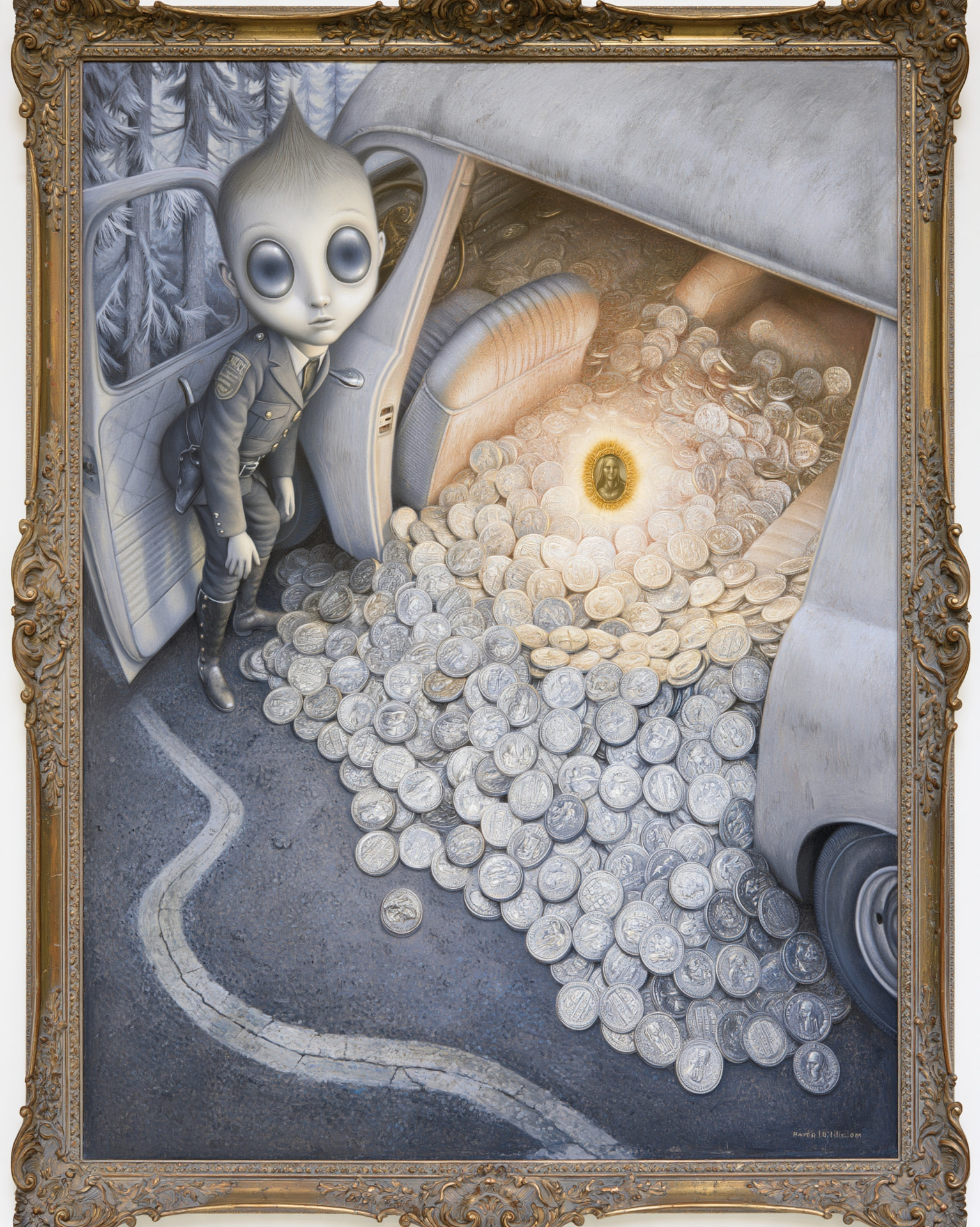
A VAN SWERVED ON A NORWEGIAN HIGHWAY AND ENDED A SEVEN-YEAR TREASURE HUNT
police stopped a van for driving erratically outside oslo. inside were tens of thousands of stolen american silver coins. a second van pulled up minutes later carrying the rest.

THE SURPRISE WAS A HUNDRED DOLLARS ON A PHONE FROM LAST YEAR
apple held an event called surprise and shine. while everyone looked at the foldable, the phones it did not announce quietly went up a hundred dollars each, with no press release and no explanation on any page.